Mastering the Art of Hand Drawn Circles: A Guide to Circular Brush Strokes and Doodle Vectors
In the vast landscape of digital design, there is a growing appreciation for the imperfect, the organic, and the human touch. Among the most versatile elements in this aesthetic are hand drawn circles. Unlike their geometrically perfect counterparts created by software algorithms, these shapes carry a sense of warmth, spontaneity, and creativity. Whether you are a graphic designer, a teacher creating educational materials, or a brand manager looking to soften your visual identity, understanding how to utilize circular brush pen stroke doodles can significantly elevate your work.
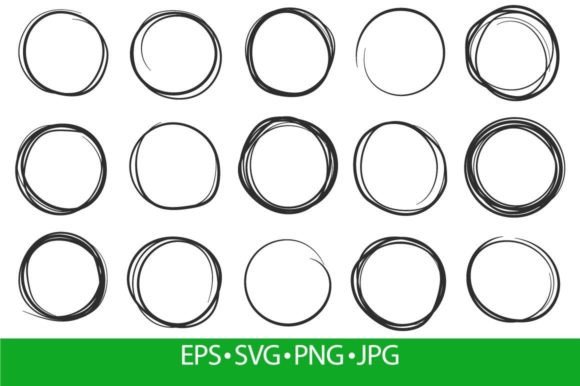
This article explores the significance of sketch bubble doodle drawing vector sets, examining why black paint line borders and rings isolated on white backgrounds have become essential assets in modern visual communication. We will delve into the practical applications of these elements, the technical benefits of using formats like EPS, SVG, PNG, and JPEG, and how to integrate them effectively into your projects.
The Appeal of Imperfection in Digital Design
For decades, digital design was synonymous with precision. Grids were rigid, lines were straight, and circles were mathematically flawless. However, as digital saturation increased, audiences began to crave authenticity. This shift gave rise to the popularity of scribble circles and round pencil frames. These elements mimic the natural movement of the human hand, introducing subtle variations in line weight, texture, and curvature.
The psychological impact of these shapes is profound. A perfect circle can feel cold, corporate, or distant. In contrast, a hand-drawn circle feels approachable, friendly, and informal. It suggests that a human being was involved in the creation process, fostering a stronger emotional connection with the viewer. This is particularly valuable in industries such as education, wellness, artisanal crafts, and personal branding, where trust and relatability are paramount.
Understanding the Components: Brushes, Strokes, and Doodles
To effectively use these assets, it is helpful to understand the terminology often associated with them:
- Circular Brush Pen Stroke: This refers to the specific texture of the line. It mimics the ink flow of a marker or brush pen, often featuring tapered ends and slight irregularities that suggest pressure variation.
- Sketch Bubble Doodle: These are looser, more playful iterations. They often look like quick annotations made in a notebook, perfect for highlighting key information without appearing aggressive.
- Black Paint Line Borders: These provide a bolder, more artistic frame. The "paint" aspect implies a thicker, more textured application, suitable for making a strong visual statement.
When these elements are combined into a comprehensive vector set, they offer designers a toolkit for adding hierarchy and focus to any layout. For instance, you might use a delicate pencil frame for a subtle emphasis and a bold paint border for a primary call-to-action.
Practical Applications Across Industries
The versatility of hand-drawn circles allows them to fit seamlessly into various contexts. Here is how different sectors leverage these creative assets:
- Education and E-Learning: Teachers and instructional designers use round pencil frames to highlight important definitions, formulas, or tips. The informal style reduces anxiety and makes learning materials feel less intimidating.
- Marketing and Social Media: In a feed dominated by polished photography, a scribble circle around a product or text overlay can stop the scroll. It draws the eye naturally and adds a layer of personality to promotional graphics.
- Web Design and UI/UX: While user interfaces require precision, hand-drawn elements can be used for onboarding tutorials, error messages, or feature highlights to make the experience feel more conversational and less robotic.
- Packaging and Branding: Artisanal products often use sketch bubble doodles on labels to convey a handmade, small-batch quality. It reinforces the narrative of craftsmanship.
Technical Considerations: Choosing the Right File Format
One of the most critical aspects of working with digital assets is selecting the appropriate file format. A high-quality hand drawn circles vector set typically includes multiple formats to ensure compatibility and scalability. Understanding the differences between EPS, SVG, PNG, and JPEG is essential for maintaining design integrity.
Vector Formats: EPS and SVG
Vector files are composed of mathematical paths rather than pixels. This means they can be scaled to any size without losing quality.
- EPS (Encapsulated PostScript): This is the industry standard for print design. If you are creating business cards, brochures, or large-format posters, EPS ensures that your black paint line borders remain crisp and sharp, regardless of the dimensions.
- SVG (Scalable Vector Graphics): Ideal for web and app development, SVGs are lightweight and code-based. They allow developers to animate the strokes or change colors via CSS, offering dynamic interactivity that static images cannot match.
Raster Formats: PNG and JPEG
Raster files are made of pixels and are best suited for specific use cases where vector editing is not required.
- PNG (Portable Network Graphics): The preferred choice for digital screens when transparency is needed. Since these circles are often used as overlays, a PNG with a transparent background allows you to place the ring isolated on white or any other color seamlessly.
- JPEG (Joint Photographic Experts Group): While less ideal for graphics with sharp lines due to compression artifacts, JPEGs are useful for quick previews or when file size is a strict constraint and transparency is not required.
Common Misconceptions About Hand-Drawn Assets
Despite their popularity, several misunderstandings persist regarding the use of sketch-style elements. Clarifying these can help users make better design decisions.
Misconception 1: They look unprofessional.
Many assume that "hand-drawn" equals "amateur." However, professional vector sets are crafted by skilled illustrators who balance randomness with aesthetic harmony. When used strategically, they enhance professionalism by adding polish and intentionality to the design.
Misconception 2: They are difficult to integrate.
Some designers worry that organic shapes will clash with structured layouts. In reality, hand-drawn circles act as excellent bridges between rigid grids and free-form content. They soften transitions and guide the viewer’s eye without disrupting the overall structure.
Misconception 3: One style fits all.
Not all scribble circles are created equal. A thick, aggressive brush stroke conveys a different energy than a thin, delicate pencil line. It is crucial to select a set that matches the tone of your brand. A children’s book might benefit from playful, bubbly doodles, while a minimalist blog might require subtle, thin-line rings.
Best Practices for Implementation
To get the most out of your circular brush pen stroke doodles, consider the following tips:
First, maintain consistency. If you choose a rough, charcoal-style texture for one element, avoid mixing it with a clean, ink-pen style unless there is a deliberate contrasting purpose. Consistency builds a cohesive visual language.
Second, respect white space. Hand-drawn elements thrive when given room to breathe. Overcrowding a sketch bubble with too much text or surrounding graphics can diminish its impact. Let the imperfection of the line stand out against clean backgrounds.
Third, use color thoughtfully. While black paint line borders are classic and versatile, don’t be afraid to experiment with color. Many vector sets allow for easy recoloring. A soft pastel circle can create a gentle highlight, while a vibrant neon ring can create urgent emphasis.
Conclusion
Hand drawn circles and circular brushes are more than just decorative flourishes; they are powerful tools for communication. By bridging the gap between digital precision and human warmth, they help creators connect with their audiences on a deeper level. Whether you are utilizing rings isolated on white for a clean minimalist look or employing sketch bubble doodles for a playful vibe, these assets offer endless possibilities.
By understanding the technical nuances of EPS, SVG, PNG, and JPEG formats, and by applying these elements with intention and context, you can transform ordinary designs into engaging, memorable experiences. Embrace the imperfection, celebrate the human touch, and let your creativity flow within the bounds of the perfect imperfect circle.