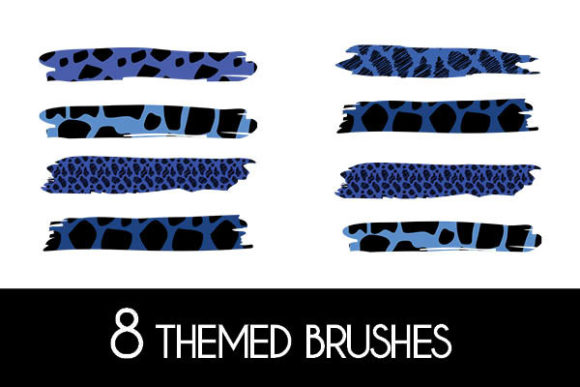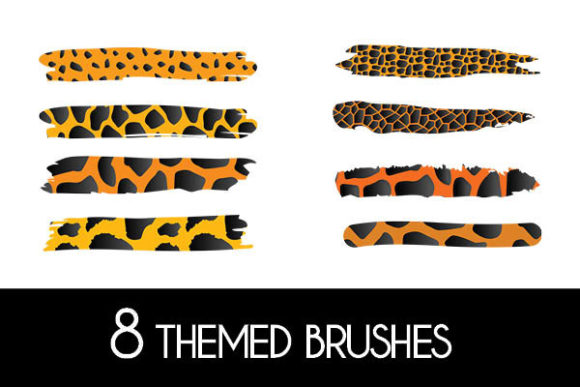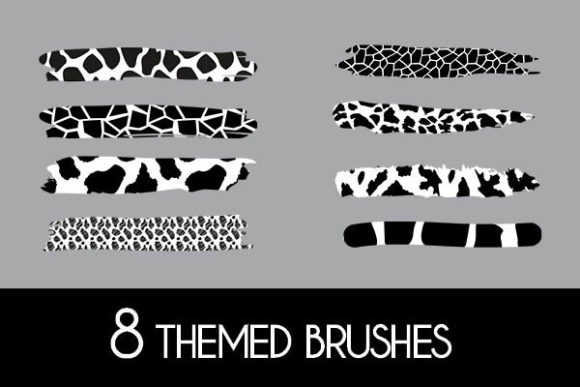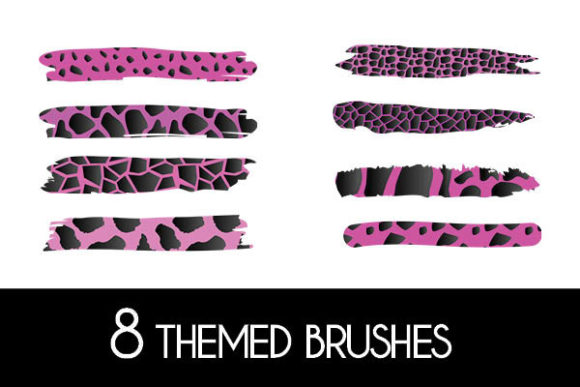
Choosing the Right Set of Artistic Line Using Pen Brushes for Professional Design Workflows
In the evolving landscape of digital illustration and graphic design, the demand for authentic, hand-crafted aesthetics has never been higher. Designers are increasingly moving away from sterile, computer-generated perfection in favor of textures that convey human touch and organic imperfection. This is where a Set of Artistic Line Using Pen Brushes becomes an invaluable asset. These collections typically feature hand-drawn grunge strokes and line vector illustrations that bridge the gap between traditional ink work and modern digital scalability. Understanding how to evaluate these resources, what file formats matter most, and when they fit into your workflow is essential for making an informed purchasing or downloading decision.
Defining the Value of Hand-Drawn Grunge Strokes
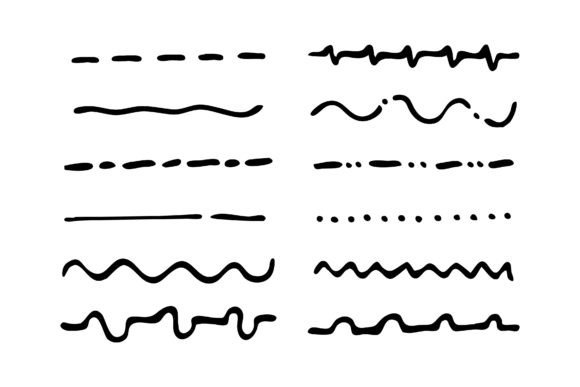
At its core, a set of artistic lines created with pen brushes is designed to replicate the unpredictability and texture of physical media. Unlike standard vector paths that are smooth and uniform, these assets incorporate "grunge" elements—slight variations in width, textured edges, and irregular curves that mimic the behavior of ink on paper or dry brush on canvas. The distinct advantage here is authenticity. When you integrate these strokes into branding, packaging, or web design, you add a layer of warmth and personality that purely geometric shapes often lack.
The term "vector illustration" is critical in this context. Many designers hesitate to use raster-based brushes (like those found in Photoshop) because they lose quality when resized. A high-quality Set of Artistic Line Using Pen Brushes solves this by providing the aesthetic of hand-drawn art within a vector framework. This means the lines remain crisp and editable regardless of whether they are scaled down for a business card or blown up for a billboard. The combination of organic texture and mathematical precision is what makes these tools particularly powerful for professional applications.
Evaluating File Formats: Why Versatility Matters
When assessing any digital design resource, the included file formats are a primary indicator of utility and long-term value. A comprehensive download package should not limit you to a single software ecosystem. For instance, receiving only JPEGs would severely restrict your ability to edit the lines, change colors, or adjust transparency. Conversely, a well-curated set offers a multi-format approach to ensure compatibility across various stages of the design process.
Consider the following breakdown of typical files included in a premium package:
- EPS and AI Files: These are the industry standards for vector graphics. Adobe Illustrator (AI) and Encapsulated PostScript (EPS) files allow for full editability. You can manipulate anchor points, adjust stroke weights, and recolor elements without any loss in fidelity. This is crucial for designers who need to customize the lines to match specific brand guidelines.
- SVG Files: Scalable Vector Graphics are essential for web and UI design. Unlike raster images, SVGs code the shape directly, making them lightweight and perfect for responsive websites. Having an SVG option means you can implement these artistic lines directly into code without needing complex workarounds.
- PNG Files: Portable Network Graphics offer transparency, which is vital for overlaying grunge strokes onto photographs or colored backgrounds without a white box appearing around the edges. While not editable like vectors, PNGs are ready-to-use for quick compositing in programs like Photoshop or Canva.
- JPEG Files: Although less flexible due to their lack of transparency and compression artifacts, JPEGs serve as useful previews or for situations where file size is a strict constraint and editing is not required.
A package that includes 1 EPS, 1 AI, 3 JPEGs, 1 PNG, and 1 SVG file demonstrates a thoughtful approach to user needs. It acknowledges that different projects require different tools. If a resource lacks vector formats, it may not be suitable for professional print work, whereas a lack of PNGs might hinder quick social media content creation.
Comparing Vector Lines to Raster Brushes and Stock Photos
To determine if a Set of Artistic Line Using Pen Brushes is the right choice, it helps to compare it against common alternatives. Many designers initially turn to raster brush packs for software like Procreate or Photoshop. While these offer immense creative freedom during the drawing process, they are static once rendered. If you draw a line at 500 pixels wide and later need it at 2000 pixels, the result will be pixelated and blurry. Vector lines, by contrast, are resolution-independent. They are defined by mathematical equations, allowing infinite resizing without quality degradation.
Another alternative is using stock photography of hand-drawn elements. While photos can look realistic, they are difficult to integrate seamlessly into clean layouts. Removing backgrounds from photos often leaves jagged edges or halos, and changing the color of ink in a photograph is technically challenging and rarely looks natural. Vector illustrations, even those mimicking grunge textures, allow for easy color manipulation. You can shift a black ink stroke to navy blue or deep red with a single click, maintaining the texture while adapting to your palette.
However, there are tradeoffs. Purely hand-drawing every element gives you total control over composition and flow, which pre-made sets cannot fully replicate. A set of artistic lines provides building blocks, not finished compositions. Therefore, these resources are best viewed as accelerators rather than replacements for custom illustration. They are ideal for designers who need consistent stylistic elements quickly but still want the flexibility to arrange and modify them.
Identifying the Best-Fit Use Cases
Understanding when to deploy these artistic lines can significantly enhance your design efficiency. They are particularly effective in industries that value craftsmanship, heritage, or organic qualities. For example, in the food and beverage sector, grunge strokes can evoke the feel of artisanal brewing or farm-to-table freshness. In fashion and lifestyle branding, they add a touch of rebellious elegance or bohemian flair.
These assets also excel in editorial design. Magazine layouts often require dividers, frames, or accent marks that break the rigidity of grid systems. A hand-drawn line vector can serve as a subtle separator between articles or a dynamic border for pull quotes, adding visual interest without overwhelming the text. Similarly, in web design, SVG versions of these lines can be used as animated page dividers or background textures that load quickly and scale perfectly across devices.
It is important to note limitations. If your project requires hyper-realistic depiction of specific objects or highly complex shading, simple line strokes may not suffice. In such cases, detailed illustrations or 3D renders might be more appropriate. Additionally, if the "grunge" effect is too heavy, it might clash with minimalist or corporate identities that prioritize cleanliness and order. Always consider the brand voice before applying textured elements.
Making an Informed Decision
When selecting a Set of Artistic Line Using Pen Brushes, look beyond the preview images. Check the file list to ensure it includes both editable vector formats (AI/EPS) and web-ready options (SVG/PNG). Verify that the strokes are true vectors and not just raster images embedded in a vector file, which would defeat the purpose of scalability. Read reviews or examine sample files to assess the variety of strokes—do they offer enough diversity in thickness and curvature to keep your designs interesting?
Ultimately, the right resource balances convenience with quality. It should save you time by providing high-quality base elements while leaving enough room for your creative input. By choosing a versatile package that supports multiple workflows, you invest in a tool that grows with your projects, ensuring that your artistic lines remain sharp, editable, and relevant regardless of the medium.